
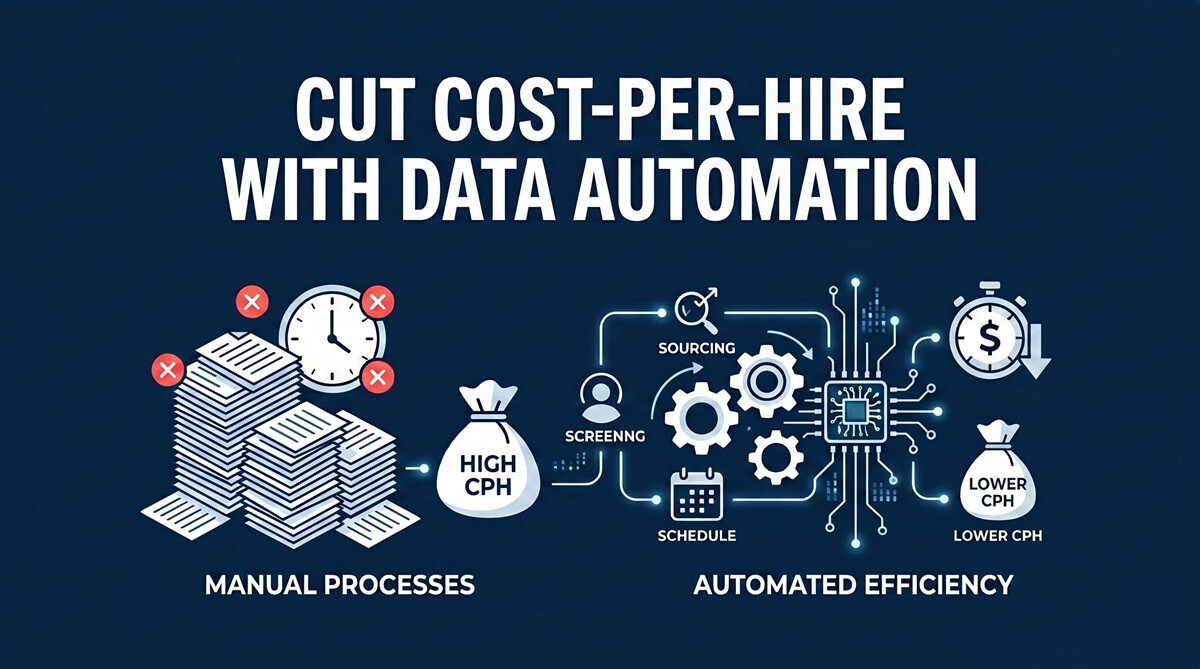
Traditional recruitment is a “black box” of manual labor and unoptimized spend. Data automation changes this by transforming every stage of the hiring funnel into a measurable, optimized process. Here is how to use data to slash your CPH in 2026.
1. Eliminate Sourcing Waste with AI Agents
Manual sourcing is an expensive time-sink, often taking over six hours of recruiter labor per hire.
- Autonomous Sourcing: AI tools can search job boards and social profiles 24/7, identifying matches in under five minutes and slashing internal time costs.
- Talent Rediscovery: Automation identifies “silver medalists”—qualified past candidates already in your CRM—so you can fill roles without paying for new job board ads.
- Smarter Ad Distribution: By tracking which channels deliver quality hires rather than just clicks, you can automatically cut low-performing boards and prioritize high-conversion platforms.
2. Automate Screening to Speed Up Shortlists
Manual resume screening often leads to bottlenecks that cause top talent to drop out, forcing expensive restarts of the search.
- Instant Filtering: AI filters applicants based on must-have characteristics, such as specific certifications or experience, putting the best candidates front and center instantly.
- Predictive Analytics: By analyzing historical turnover data, automation can detect correlations between candidate qualifications and long-term retention, allowing you to prioritize hires who will stay longer.
- Bias Reduction: Standardized, automated screening helps remove human bias from the initial stages, ensuring a larger, higher-quality talent pool without increasing costs.
3. Streamline the Candidate Journey
A slow hiring process is a costly one. Every day a position remains open adds to lost productivity and increased CPH.
- Automated Scheduling: AI schedulers eliminate back-and-forth emails by syncing stakeholder calendars and sending instant invites, reducing manual work hours and no-shows.
- Bot-Led Communication: Using WhatsApp or chatbots for status updates and interview reminders prevents “ghosting” and keeps candidates engaged through the final offer.
- Mobile-First Efficiency: Shifting to mobile-friendly or WhatsApp-based applications can dramatically reduce candidate drop-off rates and fill roles faster.
4. Reduce External Spend and Agency Fees
Contingency fees for recruitment agencies typically range from 15% to 30% of a candidate’s first-year salary.
- In-House Capacity: Data automation equips internal teams with professional-grade sourcing tools, allowing them to nurture proprietary talent pools and eliminate reliance on high-cost external partners.
- Predictive Planning: Use automation to forecast turnover and peak hiring seasons. This allows you to plan “learnership” pipelines and internal moves before you are forced to hire in a high-cost “crisis mode”.
5. Leverage End-to-End Analytics
You cannot manage what you do not measure. In 2026, leading teams use dynamic dashboards instead of static spreadsheets.
- CPA over CPC: Shift focus from Cost-Per-Click to Cost-Per-Application (CPA). Automation allows you to set bid caps, pausing spend once a job reaches a target number of qualified applicants.
- Workflow Visibility: Real-time reporting identifies exactly where bottlenecks are occurring, allowing for instant adjustments to the hiring pipeline to maintain budget efficiency.
The Bottom Line for 2026
Cutting cost-per-hire isn’t about cutting corners; it’s about cutting waste. By automating the repetitive “admin” tasks, your team can focus on the human side of recruitment—evaluating cultural fit and building the relationships that secure top-tier talent.
Ready to see how data automation can transform your recruitment ROI? Explore how Sourcing Square uses programmatic technology to automate your ad spend and deliver qualified applicants at a lower cost.